Materials are made of countless electrons and atoms. The quantum-mechanical nature of these particles, together with their many degrees of freedom, can give rise to unexpected physical laws and phenomena. These are known as emergent phenomena. Superconductivity, in which electrical resistance disappears, is a well-known example. Our research aims to understand the emergent phenomena of metallic electrons, new examples of which continue to be discovered, on the basis of quantum mechanics and statistical mechanics.
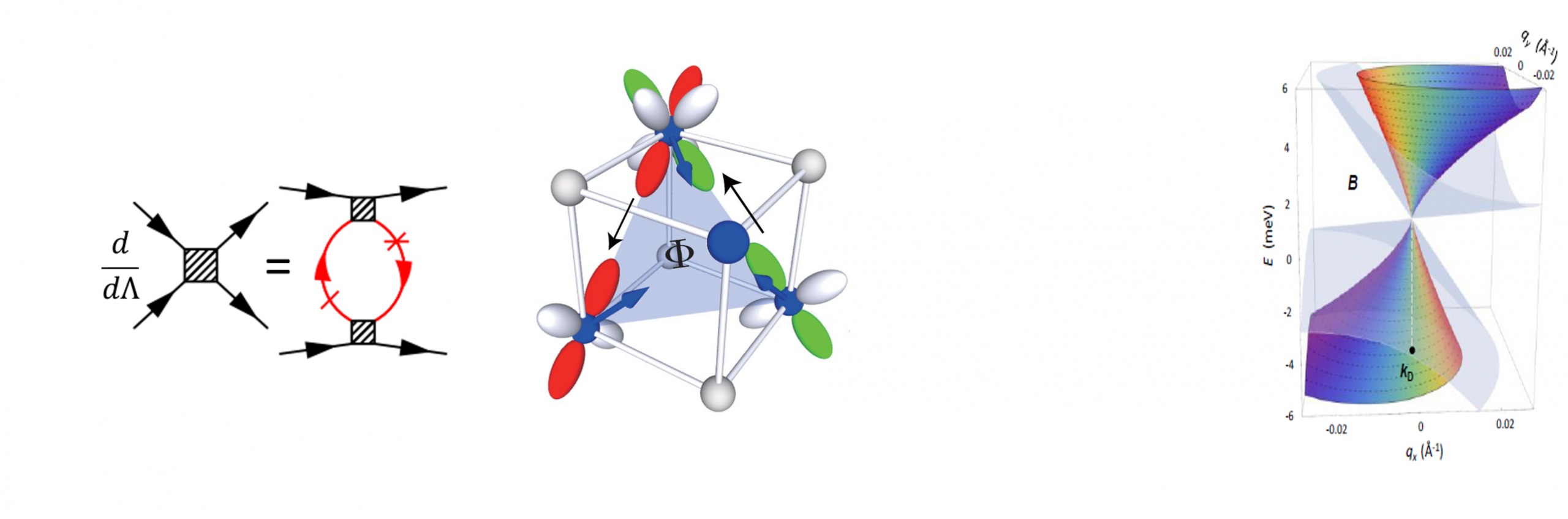
The theory of metallic electrons has advanced dramatically since the beginning of the 21st century. The discovery of iron-based superconductors in 2008 led to the establishment of a new superconducting mechanism in which orbital fluctuations mediate Cooper pairing, as well as to the identification of self-organized quantum phase transitions known as quantum liquid crystals. Dirac electrons with linear dispersion, first realized in graphene, were also discovered in organic conductors in 2004 and later in many other metallic systems, leading to rapid progress in quantum geometry and topology.
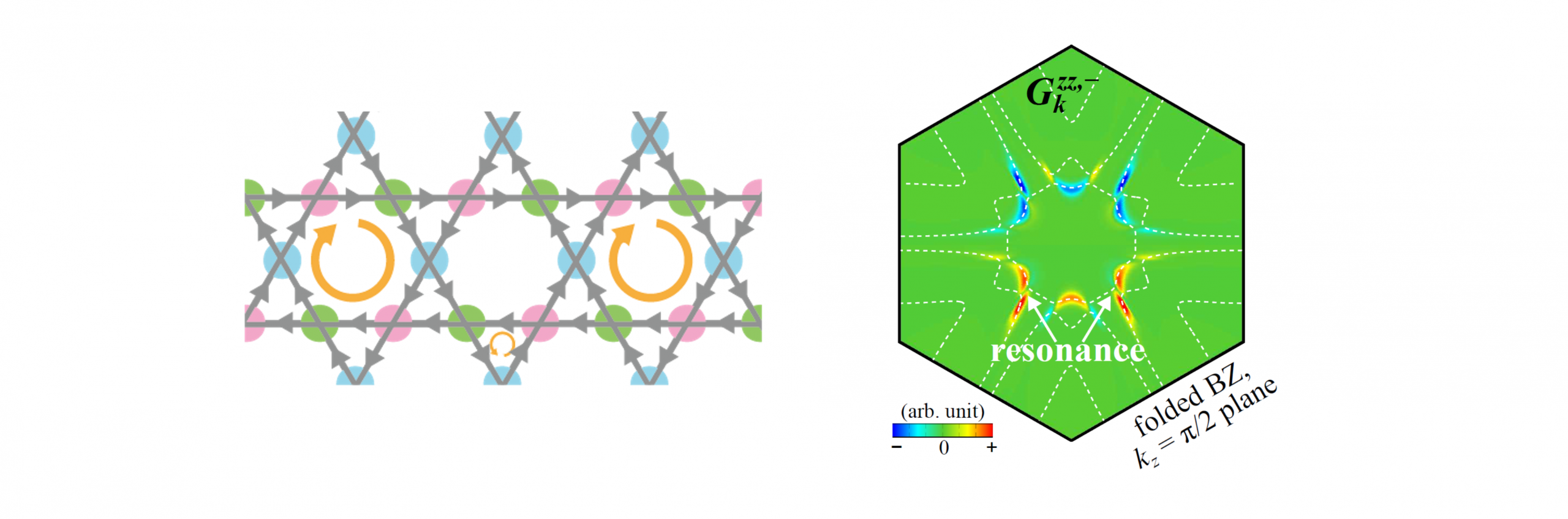
The Sc Laboratory has played a pioneering role in these developments and has led theoretical research in the field. Since 2020, the laboratory has expanded its work to a wide range of systems, including kagome-lattice metals with geometric frustration, and has theoretically clarified novel quantum states such as loop-current phases, quantum liquid crystals, and compensated ferrimagnetism.
Superconductivity
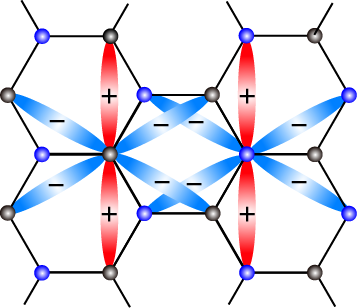
Quantum liquid crystal
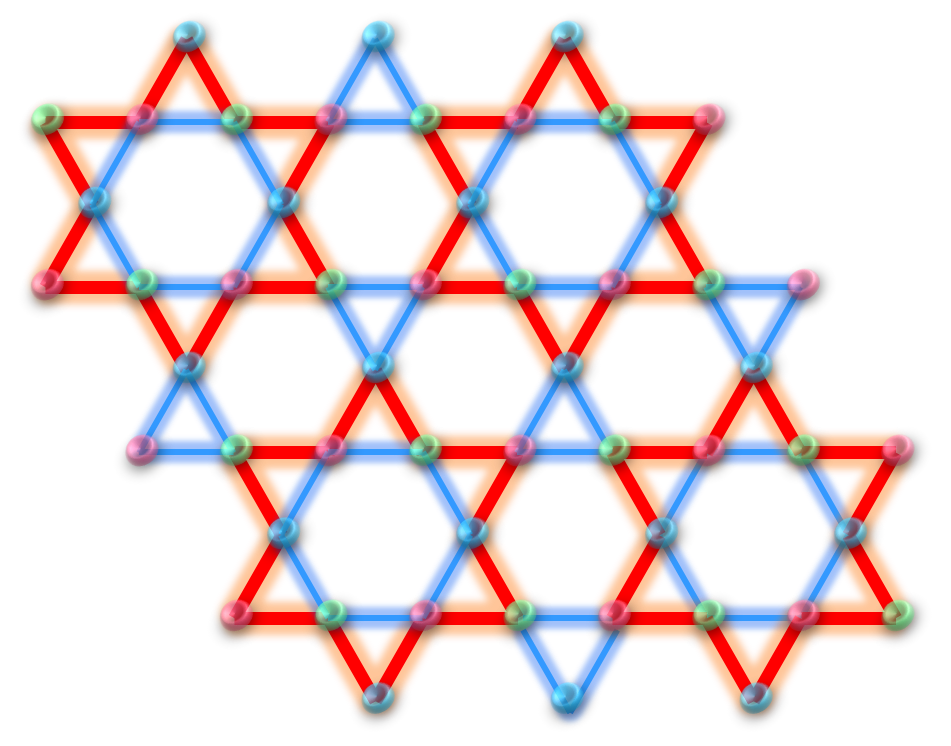
Kagome metal
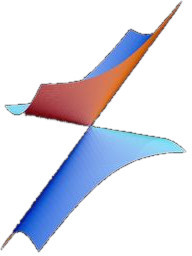
Dirac electrons
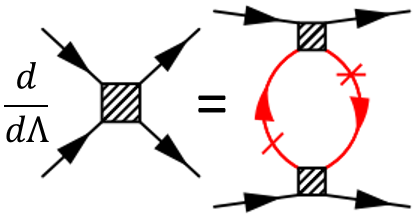
Field theory
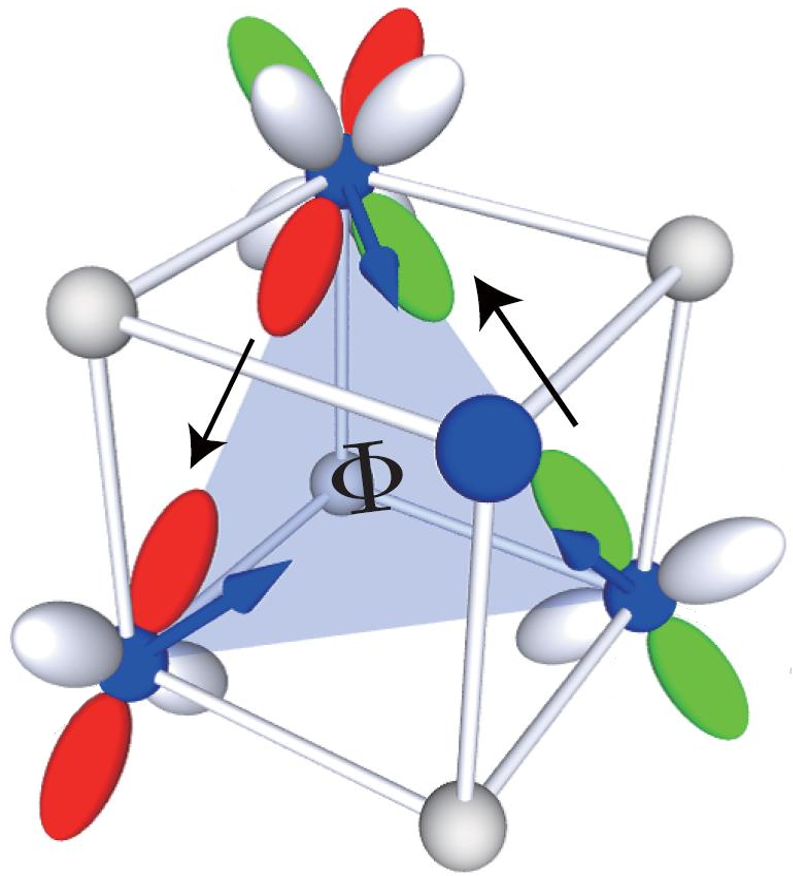
Quantum transport
Selected Publications (Since 2005)
Kagome metals
- Origin of switchable quasiparticle-interference chirality in loop-current phase of kagome metals measured by scanning-tunneling-microscopy, S. Nakazawa, R. Tazai, Y. Yamakawa, S. Onari, and H. Kontani, Nature Communications 16, 9545 (2025).
- Quantum Metric–Induced Giant and Reversible Nonreciprocal Transport Phenomena in Chiral Loop-Current Phases of Kagome Metals, R. Tazai, Y. Yamakawa, T. Morimoto, and H. Kontani, Proc. Natl. Acad. Sci. U.S.A 122, e2503645122 (2025). (Press Release) (日刊工業新聞)
- Drastic magnetic-field-induced chiral current order and emergent current-bond-field interplay in kagome metals, R. Tazai, Y. Yamakawa, and H. Kontani, Proc. Natl. Acad. Sci. USA 121, e2303476121 (2024).(Press Release)(JST Science Japan)
- Charge-loop current order and Z3 nematicity mediated by bond order fluctuations in kagome metals, R. Tazai, Y. Yamakawa, and H. Kontani, Nature Communications 14, 7845 (2023).(Press Release)
- Mechanism of exotic density-wave and beyond-Migdal unconventional superconductivity in kagome metal AV3Sb5 (A = K, Rb, Cs), R. Tazai, Y. Yamakawa, S. Onari, and H. Kontani, Science Advances 8, eabl4108 (2022).(Press Release)
Fe-based superconductors, Nickelates, Cuprates
- Unified Mechanism of Charge-Density-Wave and High-Tc Superconductivity Protected from Oxygen Vacancies in Bilayer Nickelates, D. Inoue, Y. Yamakawa, S. Onari, and H. Kontani, Commun Phys 8, 115 (2026). (Press Release)
- Discovery of mesoscopic nematicity wave in iron-based superconductors, T. Shimojima, Y. Motoyui, T. Taniuchi, C. Bareille, S. Onari, H. Kontani, M. Nakajima, S. Kasahara, T. Shibauchi, Y. Matsuda, and S. Shin, Science 373, 1122 (2021).(Press Release)
- Nematicity and Magnetism in FeSe and Other Families of Fe-Based Superconductors, Youichi Yamakawa, Seiichiro Onari, and Hiroshi Kontani, Phys. Rev. X 6, 021032 (2016).
- Sign-Reversing Orbital Polarization in the Nematic Phase of FeSe due to the C2 Symmetry Breaking in the Self-Energy, Seiichiro Onari, Youichi Yamakawa, and Hiroshi Kontani, Phys. Rev. Lett. 116, 227001 (2016).
- Spin-Fluctuation-Driven Nematic Charge-Density Wave in Cuprate Superconductors: Impact of Aslamazov-Larkin Vertex Corrections, Youichi Yamakawa and Hiroshi Kontani, Phys. Rev. Lett. 114, 257001 (2015).
- Linear Response Theory for Shear Modulus C66 and Raman Quadrupole Susceptibility: Evidence for Nematic Orbital Fluctuations in Fe-based Superconductors, Hiroshi Kontani and Youichi Yamakawa, Phys. Rev. Lett. 113, 047001 (2014).
- Orbital-Fluctuation-Mediated Superconductivity in Iron Pnictides: Analysis of the Five-Orbital Hubbard-Holstein Model, H Kontani, S Onari, Physical review letters 104 (15), 157001 (2010).
Dirac electrons, organic metals, graphene
- Compensated Ferrimagnets with Colossal Spin Splitting in Organic Compounds, T Kawamura, K Yoshimi, K Hashimoto, A Kobayashi, and T Misawa, Phys. Rev. Lett. 132, 156502 (2024).(Press Release)
- Correlation-driven electronic nematicity in the Dirac semimetal BaNiS2, C. J. Butler, Y. Kohsaka, Y. Yamakawa, M. S. Bahramy, S. Onari, H. Kontani, T. Hanaguri, and S. Shamoto, Proc. Natl. Acad. Sci. U.S.A. 119, e2212730119 (2022). (Press Release)
- SU(4) Valley+Spin Fluctuation Interference Mechanism for Nematic Order in Magic-Angle Twisted Bilayer Graphene: The Impact of Vertex Corrections, S. Onari and H. Kontani, Phys. Rev. Lett. 128, 066401 (2022).(Press Release)
- Chiral Excitonic Instability of Two-Dimensional Tilted Dirac Cones, D. Ohki, M. Hirata, T. Tani, K. Kanoda, and A. Kobayashi, Phys. Rev. Research 2, 033479 (2020).
- Anomalous spin correlations and excitonic instability of interacting 2D Weyl fermions, M. Hirata, K. Ishikawa, G. Matsuno, A. Kobayashi, K. Miyagawa, M. Tamura, C. Berthier, K. Kanoda, Science 358, 1403-1406 (2017).
- Electric Conductivity of the Zero-Gap Semiconducting State in α-(BEDT-TTF)2I3 Salt, S. Katayama, A. Kobayashi, and Y. Suzumura, J. Phys. Soc. Jpn. 75, 023708 (2006).
Quantum transport
- Intrinsic spin Hall effect and orbital Hall effect in and transition metals, T Tanaka, H Kontani, M Naito, T Naito, DS Hirashima, K Yamada, JI Inoue, Physical Review B—Condensed Matter and Materials Physics 77 (16), 165117 (2008).
- Giant orbital Hall effect in transition metals: Origin of large spin and anomalous Hall effects, H Kontani, T Tanaka, DS Hirashima, K Yamada, J Inoue, Physical review letters 102 (1), 016601 (2009).
Review articles
- Unconventional density waves and superconductivities in Fe-based superconductors and other strongly correlated electron systems, H. Kontani, R. Tazai, Y. Yamakawa, and S. Onari, Advances in Physics 70, 355 (2021).